For the same pre-tax savings effort, what each French wrapper leaves you at the end — and the retirement tax bracket where one catches up with the other.
Your figures are never sent: the calculation runs on your device. Only the use of the tool (page view, click) is measured, anonymously, without your answers: no amount, no tax bracket.
Enter a savings effort and a duration to compare.
Net in hand at the end
PER
—
PEA
—
The gap between the two, and which wrapper comes out ahead.
The break-even point: the retirement tax bracket where the two are equal.
A calculation, not advice — the assumptions are set out in the FAQ.
Free, no card, no connection to your accounts.
The guide
PER or PEA: how the choice is made
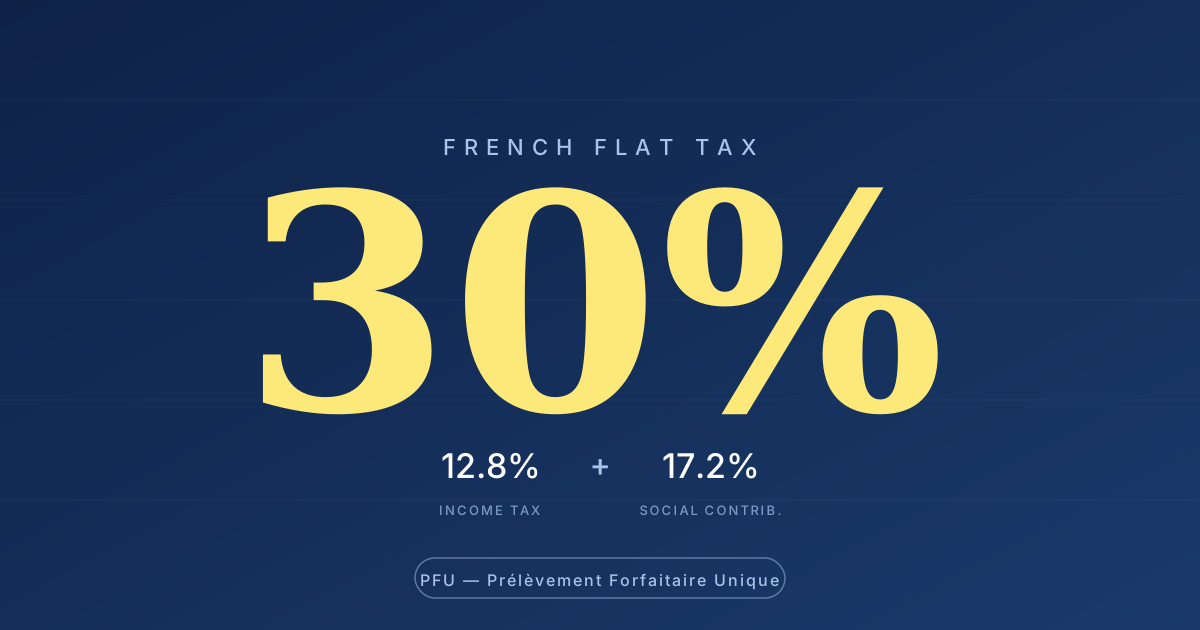
The PER retirement plan deducts your contributions from taxable income: at a 30% marginal rate, €5,000 paid in costs you €3,500. In exchange, at exit, those contributions are taxed at the scale and the gains at the 31.4% flat tax. The capital is locked until retirement, except for buying a main home and life accidents.
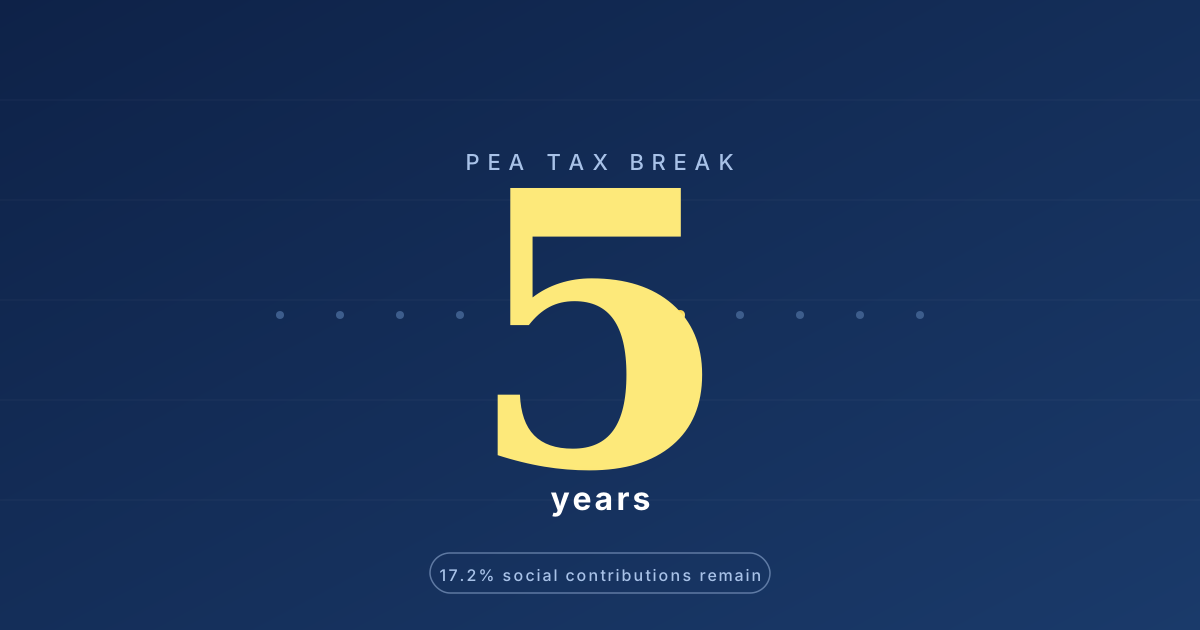
The PEA share plan deducts nothing: you pay in what is left after tax. But after five years, gains bear only 18.6% social levies, and the money stays available. Two opposite logics — one defers tax, the other pays it now and never sees it again.
What decides is your marginal rate in retirement against today's. The more it falls, the more the PER wins. And against intuition, the PER often keeps the edge even at an equal bracket: it compounded the gross, the PEA the net. The calculator gives the exact break-even for your figures.
The four steps of the comparison
1
Fix the same pre-tax effort
The only honest comparison. Into the PER, the whole effort goes, since it is deducted. Into the PEA, only the after-tax amount: effort × (1 − bracket).
2
Compound at the same return
Both wrappers can hold the same funds; what differs is the tax wrapper, not the investment. The calculator applies the same rate to both.
3
Tax the PER exit
Deducted contributions go through the retirement scale, without the 10% pension allowance; gains at the 31.4% flat tax. Exiting in several instalments avoids climbing a bracket.
4
Tax the PEA exit
After five years, only 18.6% social levies on gains. Nothing on contributions, already taxed at entry.
It is not one or the other: many do both, the PER up to the deduction ceiling when the bracket is high, the PEA for the rest and for liquidity. What matters is revisiting it every year — bracket, ceilings, value — rather than deciding once.
The choice is worth revisiting every year, with your real wrappers
Your bracket changes, your ceilings too. Patrice tracks your PER, your PEA and your life insurance side by side, with their contributions and value — and projects what they become at retirement. The account is free; the demo shows the app with sample data.
It assumes a PER paid out as a lump sum, gains taxed at the 31.4% flat rate and a PEA older than five years. It leaves out the PER deduction ceiling, the PEA contribution cap (€150,000), annuity exit, the effect of a large withdrawal on that year's bracket and contract fees. A calculation, not advice.
Because it compounds the gross amount for the whole period, where the PEA compounds only the after-tax amount. Over twenty years at 4%, that base gap outweighs the heavier taxation of gains at exit. The break-even is often a few points above the entry bracket.
10% of the previous year's professional income, within an annual ceiling, with unused ceilings carried forward for five years (three years for those before 2026). The calculator does not check it: beyond it, contributions are no longer deducted and lose their point.
The annuity is taxed like a pension, with the 10% allowance, and partly to social levies. That is a different calculation, depending on life expectancy and the contract's conversion rate. This comparison only covers the lump-sum exit.
After five years, yes: free withdrawals, without closing. Before five years, a withdrawal closes the plan and gains are taxed at the 31.4% flat tax. The PER stays locked until retirement outside the release cases.
Not by us. The calculation runs in your browser, and your values are kept on this device only, so that switching language does not empty the form. Only the use of the tool is measured, anonymously — page viewed, calculation made — without your answers: never the amounts or the brackets you chose.
 taxation